Performance & Behaviour

Good. Better.
World class.

You're already good — and so is everyone you're competing with. The work I do sits in the specific gap between performing well and performing at your actual capability: consistently, under real pressure, in the moments that decide things.

10
Years professional NRL
10
Years behavioural science
4
Ways to engage
The Starting Point
Skills and knowledge are already in place. The gap between good and elite lives in what runs automatically under pressure.
The Work
Identify the specific pattern. Build the replacement response. The new default holds under pressure — that's the measure.
The Principle
Your ceiling isn't set by your talent. It's set by what your nervous system learned to protect.
The Starting Point

The gap between good and elite lives in a specific place.

For people already performing at a high level, the room for optimisation isn't in skills, knowledge or effort. Those are already there. The room is in what happens automatically when the pressure is real — the response patterns that run faster than any deliberate decision. Some sharpen performance under the heat. Others create drag: hesitation before a decision that needs to be made, caution when the moment needs boldness, managing how things look instead of how they go.

Feedback and training genuinely help. The limitation is that these patterns don't live at the level of conscious behaviour — which is why understanding a pattern and changing it at the level it operates are two different things. You don't change a muscle memory by understanding it. You build a new one.

Behaviour is never the first event. It's the visible end of a five-step sequence that starts somewhere else entirely — and once you work at the level where the sequence starts, the gap between good and elite becomes directly addressable.

Start Here

Want to understand what pressure is changing?

The fastest way to know whether this work is relevant is simple: tell me what is happening. The person, the team, the repeated pattern, the moment under pressure. I will read it cleanly and tell you where I would start.

1
Direct conversation
No
Hard pitch
Clear
Next step
Tell me what is happening →

Prefer a quick tool first? Try the Performance Gap Calculator

How It Works

The work happens at the level
the pattern was built.

Exactly What The Work Involves

Precise and practical. Not a general personality type — the specific pattern, the specific trigger, the specific drag, for this person, in these situations. Three stages.

01 — Identify
Identify the specific pattern
What activates under pressure for this person, what it looks like in real situations, and exactly where it creates drag on performance. The exact thing — named and understood precisely.
02 — Build
Build the replacement response
Deliberate, progressive practice under real conditions — exactly the way any elite skill is built. Small at first, increasing in pressure, until the evidence accumulates and the nervous system updates.
03 — Default
The new response becomes the default
Not through willpower. Because it has been installed at the same level the original was built. The change is real and it holds under pressure. That's the measure.
The Five P's

Why the same patterns keep returning despite feedback and effort. The nervous system runs a prediction that drives everything that follows — and the behaviour anyone can see is only step four of five.

Prediction
The system forecasts what is about to happen based on prior evidence.
Protection
The body prepares to protect against the predicted future. Tightens, rushes, freezes.
Perception
Attention narrows around the predicted threat. The world shrinks to fit the forecast.
Performance
The protection strategy runs. Control, avoidance, defensiveness, over-performing.
Proof
The outcome either confirms or updates the prediction. The system learns.

"You cannot change behaviour by targeting behaviour. You have to change the prediction that is generating it."

What Changes

What elite performance actually looks like.

These are the specific, observable shifts the work produces:

Performance under pressure that matches your best — consistent when the stakes are highest, not just when conditions are right
Decisions made and acted on without the hesitation that used to sit in front of them — full speed, full clarity
The energy that went into managing the pattern — second-guessing, over-control, managing how things look — returns to the work itself
A sharper read on the people around you — what's driving their behaviour becomes legible, and the effective response becomes obvious
The Relational Payoff

Learn the language in yourself.
Read it in everyone.

When you understand the automatic patterns operating in you — how they activate, what they look like, what drives them — you start reading the same language in the people around you. The colleague who tightens before a decision. The client who hedges when they're close to committing. The team member who goes quiet when the room needs their contribution.

Most leaders spend a career trying to develop this level of fluency with people. Some get there through years of experience. Some never do. It is the direct and natural result of doing the individual performance work — because once you understand the language from the inside, you read it everywhere.

The fluency runs in three moves: See, Decode, Respond.

See
Catch the behaviour cleanly
The specific observable action — not the story usually attached to it.
Decode
Read what's actually driving it
Not the surface presentation of the behaviour — what's generating it.
Respond
Respond to what's actually running
With that read, the most effective response becomes clear. Not a reaction — a strategic response.
About Shane

Built from the inside of
elite performance.

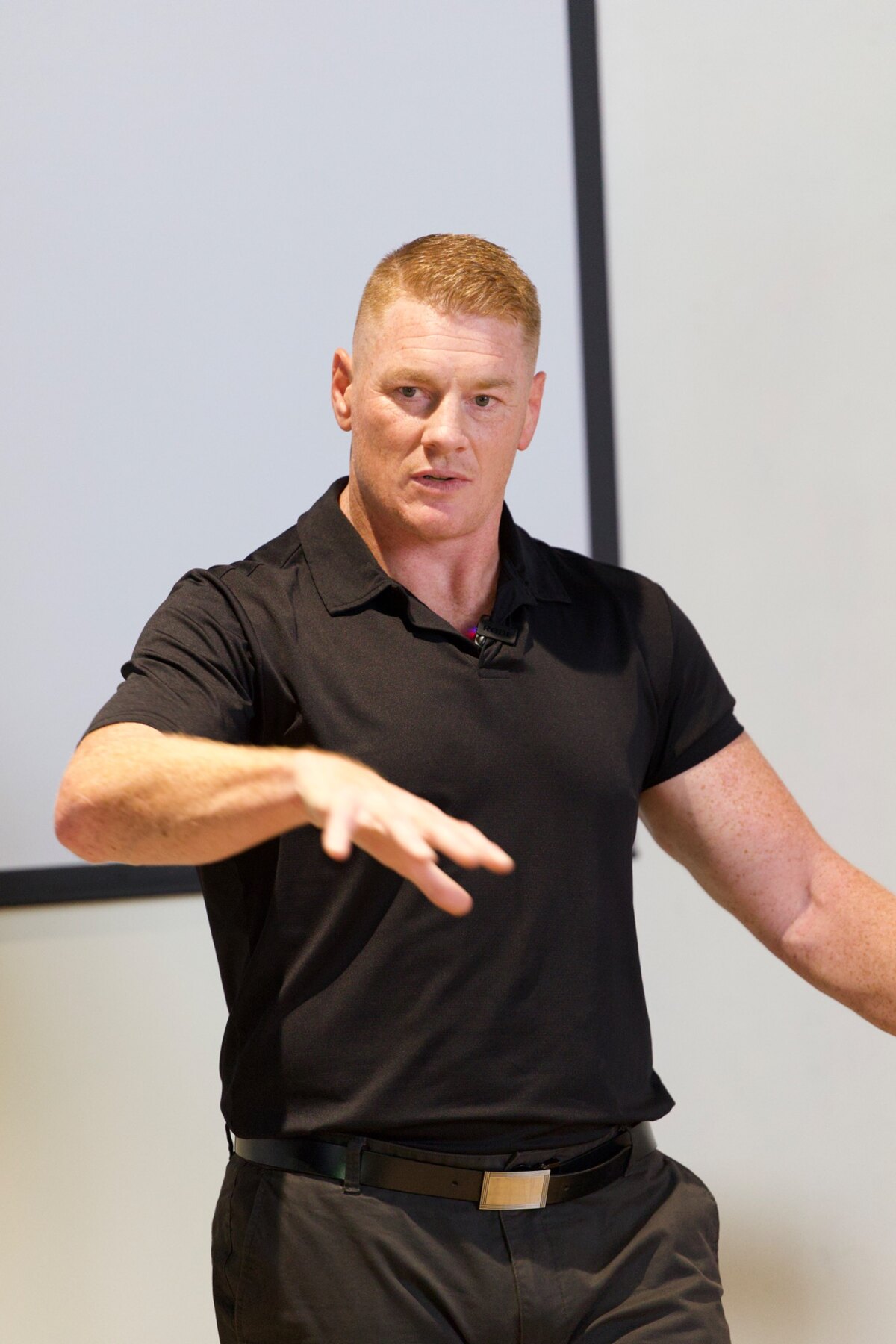
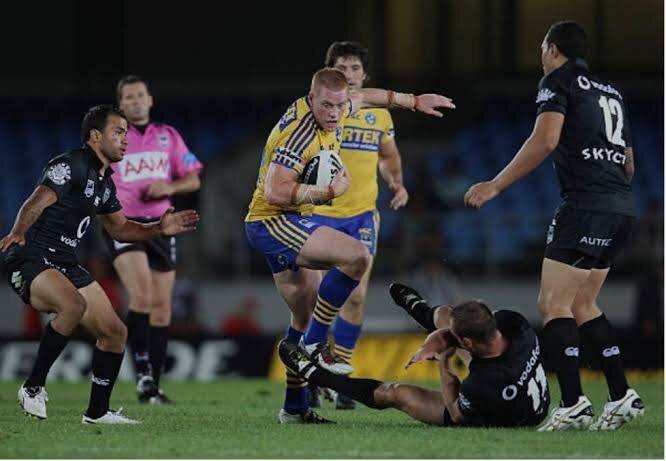
I spent a decade at the highest level of professional rugby league — Roosters, Eels, Panthers. Elite sport from the inside. And the single most important thing I learned there is that at the top level, everyone has the skill. The margin between elite and not-quite-elite in high-stakes moments is what runs automatically when the pressure is real. I saw it decide careers, consistently, for ten years. The mechanism that decides a grand final moment is the same one that decides a board meeting. Different stadium. Same system.

When my playing career ended, I trained as a counsellor and behaviour specialist and spent the next decade studying the science behind what I'd experienced — the mechanics of automatic behaviour, the conditions under which patterns genuinely change, and the specific level at which lasting performance shifts occur. What I found is this: behaviour under pressure is not emotional. It is predictive. The nervous system runs a forecast and prepares the body to protect against it — before anyone has decided anything.

The Steady Advantage is the result of that work — applied to leaders, teams and athletes who want to know what elite performance actually feels like from the inside, and are prepared to do the work to get there.

How to Get Started

The Offerings.

Four ways to engage — from a single event to the deepest available individual intervention. Each one works at the level the patterns actually operate. The format depends on where you are and what you need.

Offering 01
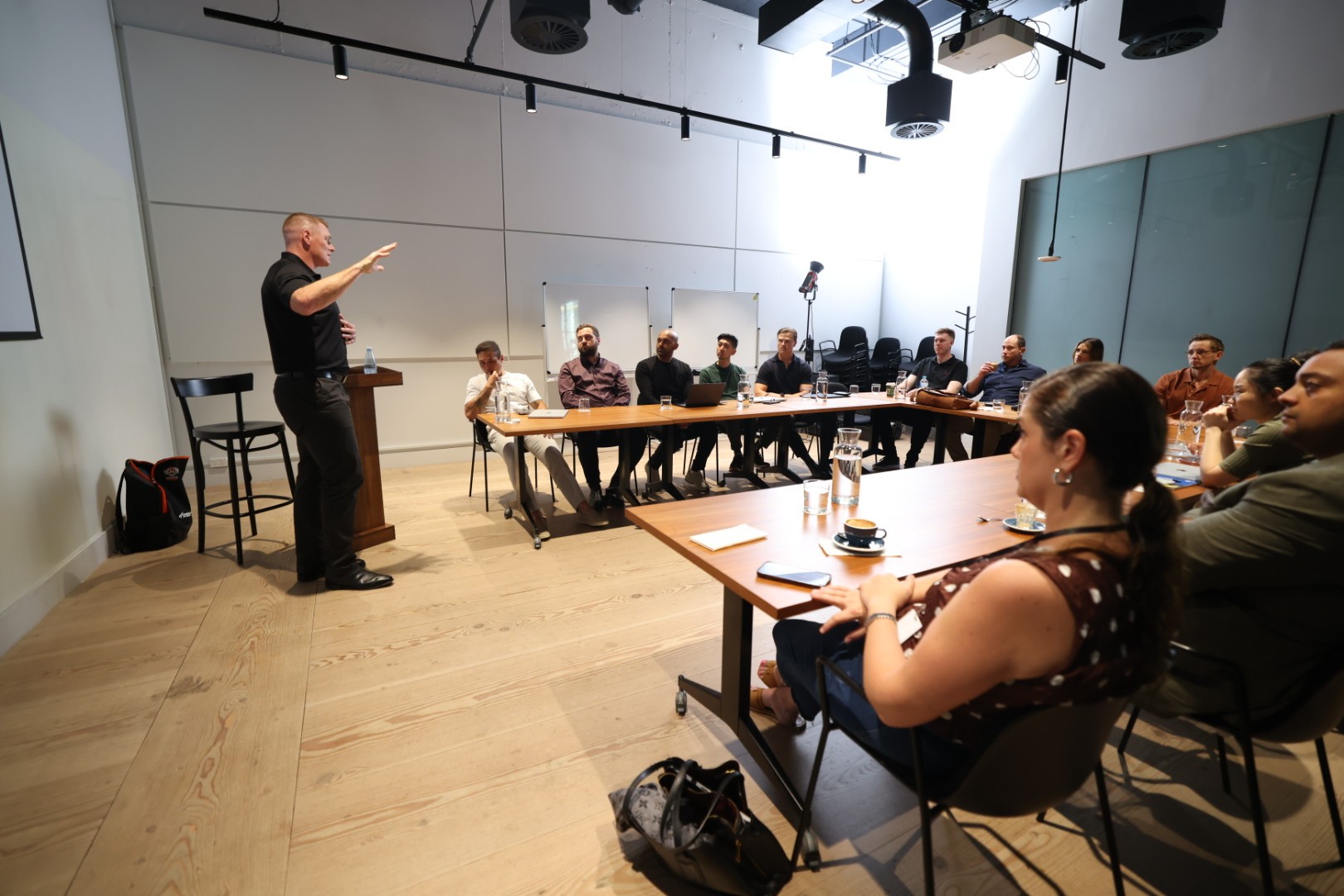
Keynote
45–60 minutes
The full picture, delivered live to your entire team or organisation. Every person leaves with a new lens on their own performance and one practical thing to apply before they get home. Built around your context.
  • The mechanism behind performance under pressure — all five steps
  • The four patterns — every person finds their own
  • See · Decode · Respond overview
  • One practical thing to apply immediately
Offering 03
One-on-One
Six sessions
The deepest available intervention. Identify the specific pattern, trace it precisely, and build the new automatic response from the ground up through progressive, real-world practice — for the individual ready to perform at their actual level, consistently, when it counts.
  • Trace and Train methodology — the full depth
  • Your exact pattern, trigger and forecast — named precisely
  • Progressive real-world practice with evidence logged
  • A change that holds under pressure — that's the measure
Offering 04
Online Program
Self-paced · Lifetime access
The complete framework at your own pace. Nine modules, 23 lessons, a scored pattern assessment, SDR practice scenarios, and a full workbook.
  • The Prediction Engine — full mechanism, all five steps
  • Your personal Pattern Profile — scored assessment
  • The Decoder — SDR applied to real scenarios
  • Leader Steadiness and The Destination
Who Uses This

CEOs and executive teams scaling under pressure. Coaches and therapists deepening their practice. Managers building high-trust teams. Anyone leading people through change.

Tech Scale-ups Professional Services Healthcare Leadership Executive Coaching Organisational Development Financial Services Sports Performance
Research Foundation

The science underneath.

Predictive Processing — Karl Friston
The brain is an active predictor, not a passive reactor. Behaviour is always the output of a predictive system — the brain's best action given its current forecast about what is about to happen.
Polyvagal Theory — Stephen Porges
The autonomic nervous system shifts state before conscious thought arrives — explaining precisely why automatic responses under pressure run faster than any deliberate decision.
Performance Under Pressure — Sian Beilock
Decades of research on why highly skilled people underperform in exactly the moments that matter most: pressure disrupts the automatic systems skill runs on. The gap is mechanical, specific — and trainable.
Expert Performance — Anders Ericsson
Elite skill is not a trait. It is built — through deliberate, progressive practice under the right conditions until the new response runs automatically. The same principle this work applies to responses under pressure.
Start Here

One conversation.
No pitch.

Tell me the context — the team, the person, the event, the situation — and I'll tell you exactly what I'd do with it, what it would involve, and what it would produce. If it's not the right fit, I'll tell you that too. A direct reply, not a sequence.

Your details are sent directly to Shane. No newsletters. No sequences.

✓  Got it. Your request has been captured. Shane will be in touch shortly.